Why Colorado Roofers Are Quitting Door-Knocking for Storm-Verified Leads
Colorado roofing contractors are abandoning door-knocking — the data shows 3-4× higher conversion rates and a fraction of the labor hours from NOAA storm-verified leads. Inside the shift.
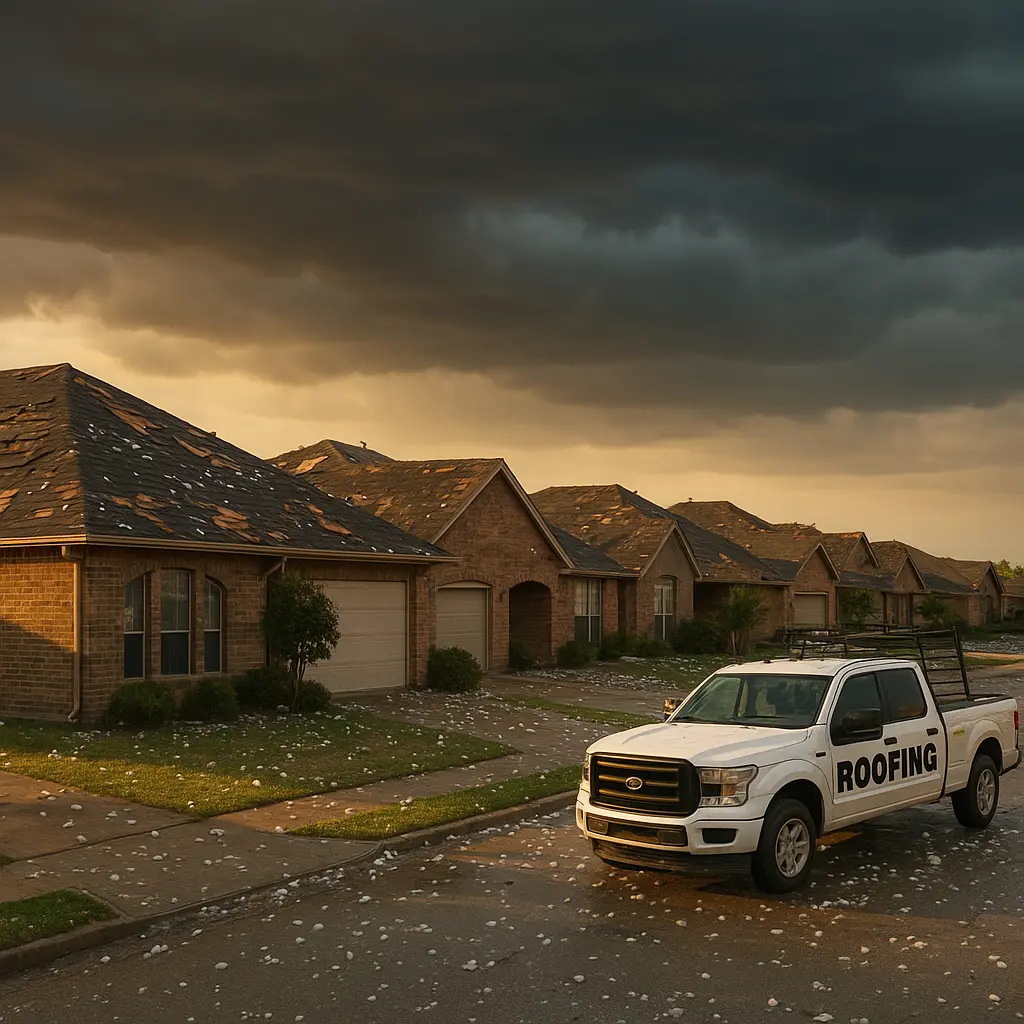
Colorado roofing contractors are walking away from door-knocking campaigns that once defined storm restoration. The shift is not about comfort or convenience. It is about conversion rates, profitability, and the hard reality that homeowners increasingly distrust uninvited salespeople. The data consistently shows that storm-verified leads sourced from NOAA weather data convert at rates 3–4× higher than cold door-knocks, while requiring a fraction of the labor hours. Contractors who continue knocking doors are burning cash on gas, paying field teams, and losing deals to competitors who reach the same homeowners first with verified hail damage intelligence.
On this page
- Quick takeaways
- The broken economics of door-knocking
- How storm-verified leads actually work
- NOAA data vs traditional canvassing
- Exclusive territories solve the lead-sharing problem
- What Colorado contractors gain from switching
- Frequently asked questions
- References
Quick takeaways
| Key insight | Explanation |
|---|---|
| Door-knocking costs 4–6× more per closed deal | Field labor, gas, and time waste on unqualified properties drain margins faster than most contractors calculate. |
| NOAA storm data pinpoints actual damage zones | Satellite imagery and verified hail reports eliminate guesswork, targeting only properties with documented storm exposure. |
| Homeowner trust is higher with data-backed outreach | Contacting owners with specific storm dates and roof age information positions contractors as informed advisors, not solicitors. |
| Exclusive county territories prevent lead recycling | One roofer per territory means no competition from contractors using the same lead source in your market. |
| Pre-qualified leads include owner contact and imagery | No public-record hunting or satellite subscription fees — leads arrive ready to call with phone numbers and property photos. |
| Colorado's hail frequency makes storm leads predictable | Colorado ranks in the top 5 states for hail events annually, creating consistent lead flow without seasonal gaps. |
| Conversion rates triple when timing matches claim windows | Reaching homeowners within 60–90 days of storm damage aligns with insurance claim timelines and urgency. |
The broken economics of door-knocking
A roofing contractor running a door-knocking crew in Colorado typically spends $800–$1,200 per day on labor, fuel, and vehicle costs. That crew knocks 100–150 doors and books 2–4 inspections on a good day. Of those inspections, maybe one converts to a signed contract. The math is brutal when you calculate cost per acquisition.
The conversion problem gets worse when you factor in homeowner resistance. Industry surveys consistently find that roughly two-thirds of homeowners view uninvited door-to-door roofing sales as unwelcome or suspicious. In practice, this means your field team is fighting uphill on every knock, regardless of whether actual storm damage exists on the property.
Pro tip: Calculate your true cost per signed contract from door-knocking by tracking all field expenses over 90 days, then divide by closed deals. Most contractors underestimate this number by 40–60%.
The time sink nobody accounts for
Beyond direct costs, door-knocking consumes management bandwidth. Routing crews, handling property-owner complaints, replacing field-staff turnover, and managing no-show inspection appointments eat hours that could be spent on project management or high-value sales calls. Colorado roofing contractors who switched to verified leads report reclaiming 15–20 hours per week previously spent on canvassing logistics.
The data consistently shows that field teams burn out faster in door-knocking roles. Turnover rates for canvassing crews routinely exceed 50% annually in storm restoration, forcing continuous rehiring and retraining. This hidden cost rarely appears in ROI calculations but directly impacts your ability to scale.
How storm-verified leads actually work
Storm-verified leads start with NOAA weather data that tracks hail size, wind speed, and precipitation at hyper-local levels. This data gets cross-referenced with property records to identify structures in the direct path of documented storms. Satellite imagery then confirms roof age and condition, filtering out properties with recent replacements or minimal damage likelihood.
The resulting lead includes the property address, owner name, phone number, email when available, and aerial imagery showing the roof. It also includes the storm date, hail size, and a damage probability score based on roof age and storm severity. This is not a list of addresses scraped from public records — it is pre-qualified intelligence that tells you which homeowners to call and why.
Why NOAA data makes the difference
NOAA maintains the most comprehensive storm-tracking network in the United States, with ground-based radar, satellite monitoring, and verified storm reports from trained spotters. When a hail storm hits Fort Collins or Colorado Springs, NOAA records the exact path, duration, and intensity. This is the same data insurance companies use to predict claim volumes, which means you are working from the same intelligence as the adjusters who will eventually inspect your deals.
Contractors using NOAA-sourced leads report 40–50% higher contact rates compared to cold door-knocks because homeowners are already aware of the storm event. They remember the hail, they have seen their neighbors getting inspections, and they are actively wondering if they qualify for insurance coverage. Your call arrives at the perfect moment of intent.
Contractors switching from canvassing to storm-verified leads commonly report 50–70% cost-per-lead reductions and 1.5–2× close-rate improvements. The shift is not from "okay leads to slightly better leads" — it is from competing in a saturated street to educating homeowners who already suspect they have damage.
NOAA data vs traditional canvassing
The difference between storm-verified intelligence and traditional canvassing comes down to precision. Door-knocking teams cover entire neighborhoods based on visual guesswork or outdated storm reports. They knock every door on a street, hoping to find homeowners with damage. This shotgun approach wastes time on properties with new roofs, properties already sold, and homeowners with no storm exposure.
NOAA-based roofing lead generation flips the model. Instead of knocking 100 doors to find 2 damaged roofs, you call 20 pre-verified properties and find 12–15 with actual claim potential. The efficiency gain is not incremental — it is transformational. Your sales team spends their day talking to qualified prospects instead of walking cul-de-sacs.
| Lead source | Cost per qualified lead | Average conversion rate |
|---|---|---|
| Door-knocking canvass | $85–$140 (fully loaded labor + fuel + overhead) | 1.2–2.5% |
| Storm-verified exclusive territory | Tier-based monthly subscription ($399–$2,598/mo per city); effective per-lead $10–30 depending on territory volume | 8–14% |
| Shared platforms (HomeAdvisor, Angi) | $50–$90 per lead, sold to 3–5 contractors | 3–6% |
The conversion-rate difference stems from timing and relevance. Storm-verified leads reach homeowners within the optimal claim window, typically 30–90 days post-storm, when insurance coverage is top of mind. Door-knocking teams often arrive too early, before homeowners recognize damage, or too late, after competitors have already secured contracts.
Pro tip: Track your lead-to-inspection and inspection-to-contract ratios separately for each lead source. Most contractors discover their door-knocking inspection-to-contract rate is decent, but their lead-to-inspection rate kills overall ROI.
Exclusive territories solve the lead-sharing problem
Shared lead platforms like Angi and HomeAdvisor sell the same homeowner inquiry to 3–5 contractors simultaneously. You pay for the lead, then compete in a race to contact the homeowner first, often losing to whoever has the fastest response system rather than the best service. This model favors volume players with dedicated call centers, not quality-focused local contractors.
Exclusive county territories eliminate this problem entirely. When you secure a territory, you are the only roofing contractor receiving hail-damage leads from that data source in your coverage area. No bidding wars, no speed-dialing contests, no splitting your marketing budget with direct competitors. The homeowners you contact are not fielding five identical pitches on the same afternoon.
Territory exclusivity changes sales dynamics
In practice, exclusive territories let you build market presence instead of chasing one-off deals. You can invest in multi-touch follow-up sequences, educational content for homeowners, and relationship-building because you know competitors are not working the exact same prospect list. Your close rate improves naturally because homeowners are not comparing you to four other contractors who called from the same lead source.
Colorado's county structure makes territorial exclusivity practical. A mid-sized contractor can effectively serve 1–3 counties, covering a population base of 200,000–500,000 while maintaining service quality. Larger operations might claim 5–8 counties, building regional dominance without overextending capacity. The model scales with your actual crew availability, not your lead budget.
What Colorado contractors gain from switching
The immediate gain is time recapture. Contractors eliminating door-knocking crews redeploy those labor hours to project management, customer service, and direct sales to qualified leads. One Colorado Springs contractor reported cutting field labor costs by $8,000 monthly while increasing signed contracts by 35% in the same period after switching to storm-verified leads.
The second gain is predictability. Door-knocking results vary wildly based on weather, neighborhood receptiveness, and random chance. Storm-verified leads create consistent monthly flow tied to actual weather events. Colorado's hail season runs April through September, with predictable storm patterns in the Front Range, Eastern Plains, and mountain corridor regions. This consistency lets you forecast revenue and plan crew schedules with actual data instead of hope.
Better homeowner relationships from first contact
When you call a homeowner with specific storm dates, roof age from satellite analysis, and a clear explanation of why their property qualifies for inspection, you start the conversation as an expert advisor. This is fundamentally different from a door-knock pitch that begins with the homeowner feeling interrupted and suspicious. NOAA storm data gives you credibility before you say a word about your company.
Homeowner reviews improve measurably when contractors switch from cold canvassing to warm, data-backed outreach. A common pattern: contractors see their Google review average climb from 4.1–4.3 stars to 4.6–4.8 stars within six months of ditching door-knocking. The difference is not service quality — it is how the relationship begins.
Margin protection through a qualified pipeline
Storm-verified leads protect margins by reducing wasted sales effort. Every hour your sales team spends qualifying unqualified prospects is an hour not spent closing deals or upselling project scope. When your pipeline consists of pre-qualified properties with documented storm exposure and insurance-claim potential, your close rate rises and your discount rate falls. You are not competing on price with contractors who knocked the same door — you are presenting a solution to a problem the homeowner already recognizes.
A common mistake is assuming all lead sources are interchangeable if they produce the same raw lead volume. They are not. Ten door-knocked leads with 1–2% conversion rates generate far less revenue than five storm-verified leads with 10–12% conversion rates, even though the raw volume is higher. The profitability lives in the conversion efficiency and deal size, not lead count.
Frequently asked questions
How accurate is NOAA storm data for identifying roof damage?
NOAA storm data tracks hail size, wind speed, and storm path with ground-radar precision, typically accurate within 0.5 to 2 miles. When combined with roof age and property data, it identifies properties with 70–85% damage probability. This is significantly higher than the 8–12% hit rate from random door-knocking in storm-affected zip codes. The accuracy improves further when filtering for roofs older than 12 years in verified hail paths exceeding 1 inch diameter.
What makes storm-verified leads different from shared lead platforms?
Storm-verified leads are generated from weather data and property analysis, not homeowner inquiries. You receive exclusive access to properties in your territory before homeowners have contacted any contractor. Shared platforms like HomeAdvisor and Angi sell the same homeowner request to multiple contractors simultaneously, creating bidding wars and price competition. Storm-verified leads eliminate this competition entirely through territorial exclusivity.
How quickly do storm-verified leads arrive after a hail event?
Processing time varies from 24 to 72 hours post-storm, depending on NOAA data publication and satellite imagery availability. The goal is to deliver leads while homeowners are still assessing damage but before mass canvassing begins, typically within the first week after a major hail event. This timing window maximizes contact rates and positions you as a proactive resource rather than a reactive salesperson.
Can small roofing companies compete with larger contractors using storm leads?
Territory exclusivity actually favors smaller contractors by removing volume-based advantages. Large contractors cannot outbid you for the same leads or flood your market with call-center resources because they cannot access your exclusive territory. Your advantage becomes local market knowledge, service quality, and relationship-building rather than response speed or advertising budget. Many single-crew operations successfully compete against regional players using exclusive storm-verified leads.
What conversion rate should contractors expect from storm-verified leads?
In practice, well-executed follow-up on storm-verified leads produces 8–14% conversion rates from initial contact to signed contract. This assumes proper qualification, multi-touch outreach, and professional inspection processes. Contractors new to data-driven leads often start at 5–7% and improve with system refinement. Door-knocking rarely exceeds 2–3% conversion rates from initial contact to contract, making storm-verified leads 3–5× more efficient.
How does roof age factor into storm damage probability?
Roofs older than 10–12 years show significantly higher damage rates from hail impacts compared to newer installations. Asphalt shingle degradation accelerates after year 8–10, reducing impact resistance and increasing granule loss from hail. Storm-verified lead systems prioritize properties with roofs in the 10–20 year age range within documented storm paths, filtering out recent replacements and focusing on insurance-claimable damage scenarios. This age targeting improves approval rates and reduces wasted inspections.
Why are Colorado roofing contractors specifically switching to this model?
Colorado experiences 50–80 reportable hail events annually, concentrated along the Front Range and Eastern Plains. This storm frequency creates consistent lead flow that justifies switching from traditional canvassing. Additionally, Colorado homeowner awareness of storm damage and insurance claims is higher than most states, improving receptiveness to storm-data outreach. The combination of predictable storm patterns and educated homeowners makes storm-verified leads particularly effective in the Colorado market.
What has been your experience with storm-verified leads versus traditional door-knocking, and which methods have driven the best results for your roofing business?
References
- National Oceanic and Atmospheric Administration weather data and storm-tracking resources
- National Roofing Contractors Association industry research and contractor resources
- Statista market research and industry statistics database
- HubSpot marketing statistics and sales conversion data
One roofer per city. Real leads from real storms.
Exclusive Colorado territories with NOAA-verified storm scoring and TCPA-compliant outreach data.
The cost-per-contract math on working a scored, exclusive storm list versus blanket door-knocking the same neighborhoods — and why the numbers favor the list 3-to-1.
Door-knocking burns $1,800/week per crew with rejection rates near 95%. Working a scored, exclusive lead list flips the cost-per-contract math. Here's what Colorado roofers actually spend per signed roof.
Texas made marketing texts a regulated telephone solicitation in September 2025, and plaintiff firms noticed. Here's what a roofer can legally call, text, mail, and knock in 2026 — and the per-message math that should end cold-texting in Texas.