Colorado's 2026 Hail Season So Far — And How to Play the Rest of It
A data-driven check-in on Colorado's 2026 hail season: how many events have hit, where the biggest stones have fallen, and the moves that separate roofers who capture peak-season storms from those who scramble.
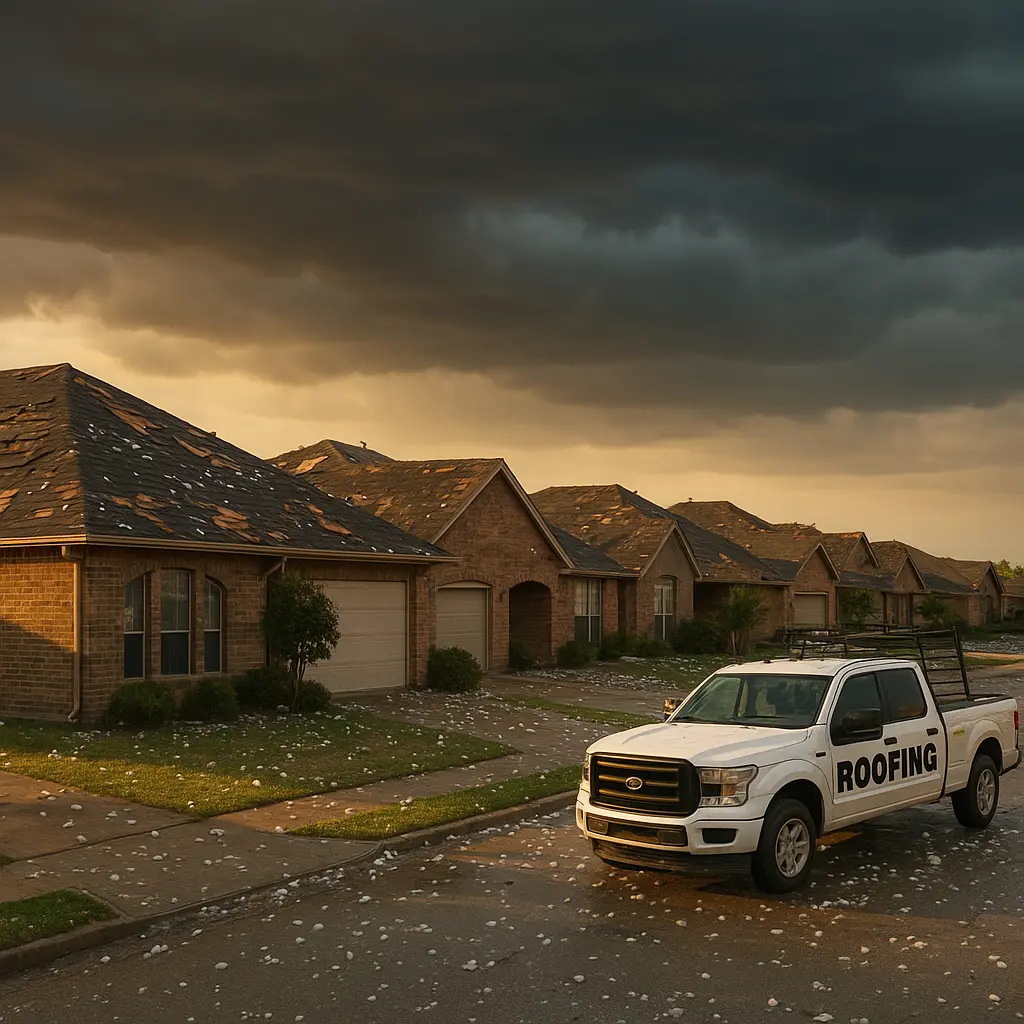
Colorado's 2026 hail season is well underway, and the heart of it — June through August — is still ahead. If you're a Colorado roofing contractor, now is the moment to look at what's already happened this year and make sure you're positioned for the storms still coming, not scrambling after the next supercell.
Here's a data-driven check-in: what's hit so far, where the biggest damage has clustered, and what it means for the rest of your season.
The numbers in this post are drawn from NOAA's Storm Events Database — the same public-record source that drives RoofLeads Pro's scoring pipeline.
The 2026 season so far
Through the first half of the year, Colorado has already logged hundreds of confirmed hail events statewide (1-inch diameter or larger). A few headline facts:
- The biggest stones so far have fallen on the eastern plains — including a 4.5-inch event in Washington County and 3+ inch hail in Elbert and Kit Carson counties.
- The Front Range metros are squarely in the middle of their season — the highest-value claim activity historically clusters here from June into August.
- Wind has been a recurring story too, with multiple high-wind days exceeding 90 mph along the northern Front Range.
That tracks with a normal-to-active Colorado year. This is a hail market that doesn't take seasons off — even an "average" year produces enormous volume.
Where the damage tends to cluster
Raw event counts can be misleading. The eastern plains see some of the largest stones, but the dollars concentrate where the homes are worth more and the rooftops are dense — the Front Range metro corridor.
That's the pattern worth internalizing: the county with the most events isn't always the county with the most claim dollars. Adams County's Thornton/Northglenn corridor, for example, does outsized damage per storm because the events that hit it land in high-value residential areas. For a roofer, that means a single well-placed metro storm can be worth more than a dozen rural ones — if you're positioned to work it fast.
The earlier-season trend is real
Colorado's hail season has been creeping earlier. The old "wait until May" instinct now leaves weeks of opportunity on the table — significant hail and damaging wind have shown up as early as March in recent years. The roofers who treat mid-March as the start of the season, not May, get a head start on the leads everyone else is still waiting for.
What roofers should do for the rest of 2026
Five concrete moves — and unlike a January planning piece, these are things you can act on this week, with peak season directly ahead:
1. Lock down your exclusive territory now. The first roofer to a storm zone wins. If you wait until a storm hits to figure out your coverage area, you're already behind the roofers who claimed theirs in the spring.
2. Pre-build your homeowner contact database. Don't wait for a storm to start pulling parcel data and skip-tracing homeowners — that takes days you won't have. Build it now, refresh it as the season runs.
3. Set up your CRM workflows for scored leads. Whatever you use — AccuLynx, JobNimbus, RoofLink, even a spreadsheet — make sure it has a "lead score" field and that your sales process works the top-scored leads first.
4. Pre-write your post-storm outreach templates. Don't be writing your email and door-knock script the day after a storm hits. Write them now and test them on small batches so they're ready to fire.
5. Pre-position your crew capacity. A single storm can create 12–18 months of work in a two-week window. If you're scrambling to hire crews after the storm, you've already lost the cream. Line up your subcontractor relationships before the next big one.
The bottom line
Even in an average year, Colorado produces enormous hail volume — and 2026 is shaping up to be a normal-to-active season with the busiest months still ahead. The roofers who win aren't the ones who react fastest after a storm. They're the ones who locked their territory, built their data, and wrote their playbook before the sky opened.
If you're a Colorado roofing contractor without a clear data-and-territory strategy heading into peak season, you're already behind the roofers who have one.
One roofer per city. Real leads from real storms.
Exclusive Colorado territories with NOAA-verified storm scoring and TCPA-compliant outreach data.
Radar found 99% of Colorado's 2026 spotter-confirmed hail. But the size number on the map is a different animal — and the 'biggest stone near this house' figure most maps show you runs about 1.25 inches high. Here's how to read one like a roofer.
Colorado logged roughly 320 hail reports in 2026 and hasn't had a significant one in three weeks. Texas logged 734 and its second season hasn't started yet. Here's the October-through-February math on a storm backlog that's still entirely inside the claim window.
Colorado's new hail-resilience law took effect August 12, 2026: up to ~$100M in state funding for hail-resistant roofing grants starting 2027, plus enforced insurance discounts for Class 4 roofs. Here's the playbook for roofing contractors.