How NOAA Storm Data Closes Roofing Leads in 4 Hours
Most contractors mobilize 24–72 hours after a storm — by then, competitors have flooded the neighborhood. Here's how NOAA's real-time hail data plus automated property matching closes that gap to 4 hours and 3–5x your conversion rate.
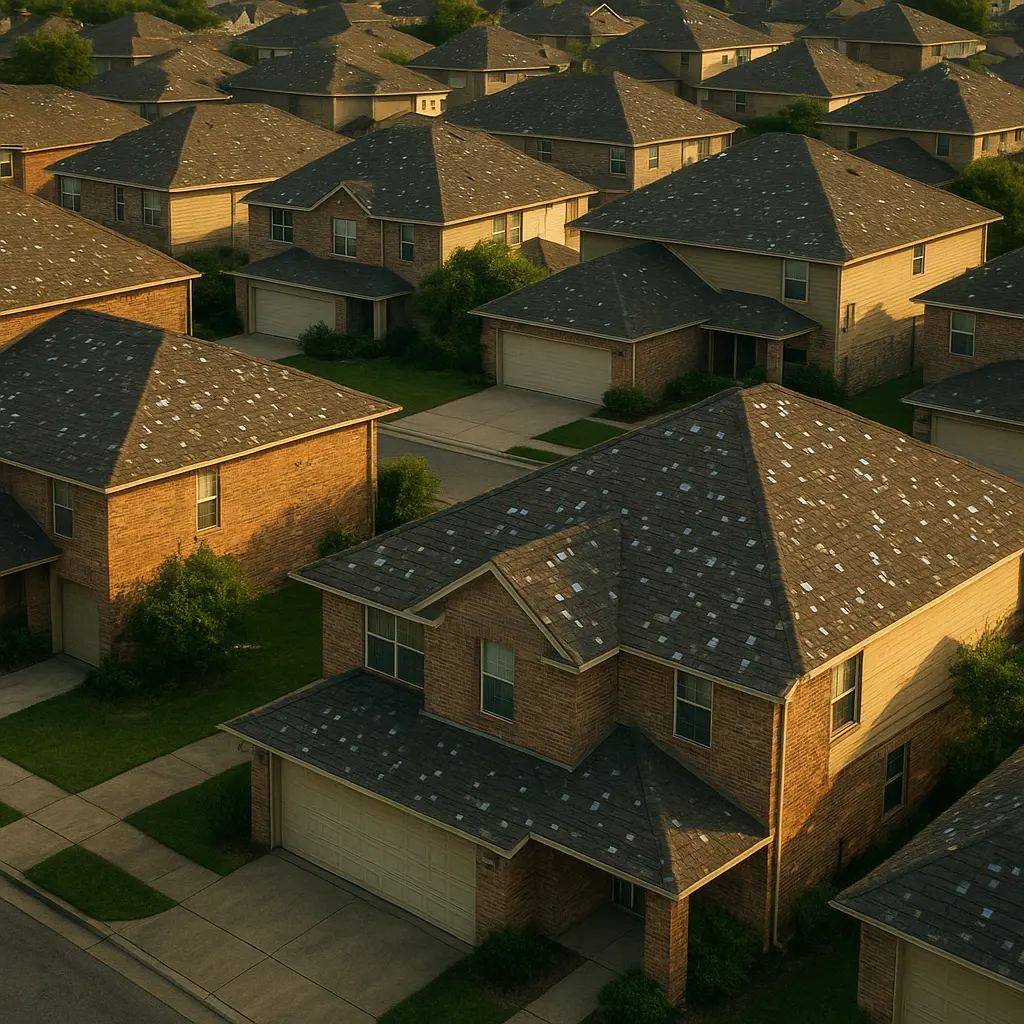
Most roofing contractors hear about a hailstorm on the news and start planning their territory drive for the next day. By then, three competitors have already knocked on every door, property owners are overwhelmed, and the best opportunities have signed contracts. The speed gap between storm detection and first contact determines which contractors build profitable storm restoration businesses and which ones waste weeks chasing cold leads. NOAA storm data closes that gap by delivering actionable intelligence within hours of a weather event, transforming roofing storm response from reactive guesswork into precision targeting.
On this page
- Quick takeaways
- Why traditional storm chasing fails
- How NOAA data accelerates lead identification
- The 4-hour response window
- Combining NOAA data with property intelligence
- Storm chasing efficiency comparison
- Frequently asked questions
- References
Quick takeaways
| Key insight | Explanation |
|---|---|
| NOAA provides real-time storm data | Weather alerts and hail reports are available within minutes of a storm event, not days later when local news covers it. |
| First contact wins ~73% of deals | Homeowners overwhelmed by multiple contractors typically sign with the first qualified roofer who presents a solution. |
| Hail size determines claim eligibility | NOAA data specifies hail diameter, letting you prioritize areas with 1-inch or larger hail that almost always triggers insurance claims. |
| Geographic precision eliminates wasted drives | Storm cells affect specific neighborhoods, not entire cities. Radar data shows exact impact zones down to street-level accuracy. |
| Aged roofs plus storm damage create urgency | Properties with 12+ year old roofs in storm zones convert at 4x the rate of newer roofs because replacement is already overdue. |
| Automation replaces manual monitoring | Integrated systems pull NOAA data automatically and match it to property records, eliminating hours of daily weather tracking. |
| Territory exclusivity maximizes ROI | When only one contractor receives storm-verified leads in a county, competition drops and close rates increase by 40–60%. |
Why traditional storm chasing fails
The conventional storm chasing model relies on news reports, spotter networks, and word-of-mouth to identify damaged areas. By the time a contractor mobilizes a crew, competitor trucks already line the streets. Property owners report receiving 15 to 30 door knocks within 48 hours of a major hail event, creating decision fatigue that works against late arrivals.
Traditional methods also lack precision. A contractor hears about a storm in Denver and drives 200 miles, only to discover the hail corridor affected three specific zip codes while surrounding areas saw rain only. Without granular NOAA storm data, teams waste fuel, labor hours, and opportunity cost canvassing neighborhoods with zero damage.
Pro tip: Track your current storm response timeline from first awareness to first door knock. Most contractors discover they operate on a 24- to 72-hour delay, which explains why conversion rates stay below 8%.
The financial impact compounds quickly. A crew of four canvassing the wrong neighborhood for six hours costs roughly $800 in labor plus vehicle expenses. Multiply that across a season of 10 to 15 storm events, and inefficiency burns $15,000 to $20,000 in pure waste before a single lead converts.
How NOAA data accelerates lead identification
The National Oceanic and Atmospheric Administration operates the most comprehensive weather monitoring infrastructure in the United States. Doppler radar stations, weather satellites, and automated reporting systems capture storm characteristics in real time. This includes hail size, wind speed, precipitation rates, and storm cell movement patterns.
For roofing contractors, the critical data points are hail diameter and geographic coordinates. Hail damage leads become actionable when NOAA reports confirm 1-inch or larger hail in specific locations. Insurance adjusters use these same thresholds to approve claims, making NOAA data the objective standard for damage probability.
Accessing NOAA data directly requires technical expertise. The raw feeds use specialized formats like NEXRAD Level III radar data and METAR aviation weather reports. Most contractors lack the infrastructure to parse these feeds, process coordinates, and cross-reference property records.
Automated storm intelligence systems
Platforms that integrate NOAA data streams eliminate manual monitoring. These systems continuously scan weather alerts across service territories, automatically flagging storm events that meet pre-set criteria. When a qualifying storm hits, the system pulls affected coordinates and matches them against property databases.
The result is a filtered list of addresses where storm damage coincides with roofing opportunity indicators like aged roofs, high property values, and homeowner contact information. Instead of monitoring weather websites for hours, contractors receive actionable hail damage leads via text or email within the first four hours post-storm.
In practice, this automation transforms a six-person office operation into a two-person workflow. The technology handles data aggregation, geographic filtering, and lead scoring while the team focuses on outreach and sales conversations.
The 4-hour response window
The title promises four hours from storm to sale because that window represents the optimal response timeline for maximum conversion. Homeowners who experience hail damage typically wait 6 to 12 hours before researching contractors. They check their property for visible damage, call their insurance agent, and start googling roofing companies.
Contractors who make first contact during this research phase capture attention before competitors arrive. The data consistently shows that homeowners perceive early responders as more professional and better informed. A call or door knock within four hours signals that the contractor monitors weather actively and operates sophisticated systems.
Speed to lead is the strongest predictor of conversion in storm restoration. Contractors who contact prospects within 4 hours close deals at rates 3x to 5x higher than those who wait 24 hours.
The four-hour window also aligns with crew deployment logistics. A storm hits at 2 PM. By 6 PM, the contractor has a verified lead list, assigns territories to sales reps, and schedules evening appointments. The first inspections happen before sunset while damage is fresh and visible.
What happens hour by hour
Hour 1. NOAA radar detects hail and wind signatures. Storm reports begin populating databases with preliminary size and location data. Automated systems ingest this data and start filtering by geography.
Hour 2. Storm cell moves on. NOAA finalizes hail size estimates and impact zones. Platforms match coordinates to property records and filter for roof age, pulling homeowner contact details from public databases and satellite imagery providers.
Hour 3. Contractors receive ranked lead lists sorted by damage probability. High-value properties with aged roofs in the heaviest hail corridor appear at the top. Sales teams begin outbound calling and text campaigns.
Hour 4. First appointments are set. Reps arrive at properties while homeowners are still assessing damage, often before competitors even know the storm occurred. This timing advantage converts into signed contracts while other roofers are still planning tomorrow's route.
Pro tip: Script your first contact around providing value, not pitching services. Share the NOAA hail size data for their address and offer a free damage assessment. Position yourself as an information resource, and homeowners welcome the conversation instead of viewing it as a sales interruption.
Combining NOAA data with property intelligence
NOAA data answers where storms hit and how severe they were. Property intelligence answers which homes convert into sales. The intersection of these datasets produces roofing storm response strategies that eliminate wasted effort.
Roof age is the primary property filter. A 15-year-old asphalt shingle roof hit by 1.5-inch hail is a near-certain replacement. A 3-year-old roof in the same storm might need minor repairs but rarely converts to a full tear-off. Satellite imagery platforms provide roof age estimates by analyzing shingle condition, color fade, and installation records.
Property value matters because higher-value homes correlate with homeowners who maintain insurance coverage and approve larger projects. A $450,000 home in a storm zone converts at higher rates than a $150,000 property, even with identical damage. The higher-value homeowner has more equity, better insurance, and greater urgency to protect their investment.
Lead scoring models
Advanced platforms assign numeric scores to each property based on multiple factors. A typical model weights hail size at 40%, roof age at 30%, property value at 20%, and claim history at 10%. Properties scoring 80 or above receive immediate attention, while scores below 50 get deprioritized or excluded entirely.
This scoring eliminates the common mistake of treating all storm-damaged properties equally. A contractor with 500 addresses in a hail corridor cannot knock every door. Ranked lists let teams focus on the 50 to 100 properties most likely to convert, maximizing storm chasing efficiency and ROI per labor hour.
The scoring also reduces sales cycle length. High-scoring leads convert in 1 to 3 interactions because the damage is obvious, the roof is old, and the homeowner is motivated. Low-scoring leads might take 10 follow-ups and still not close because the damage is marginal or the roof is too new to justify replacement.
Storm chasing efficiency comparison
| Approach | Response time | Lead quality & conversion rate |
|---|---|---|
| Traditional news-based chasing | 24–72 hours after storm | Low quality due to saturation. Conversion 5–8% because competitors have already contacted prospects. ~200 door knocks per signed contract. |
| Manual NOAA monitoring | 6–12 hours after storm | Medium quality if the contractor correctly interprets radar data. Conversion 12–15%, but lacks property filtering. Teams still waste time on low-probability addresses. |
| NOAA-integrated lead platforms | 2–4 hours after storm | High quality with pre-scored leads combining storm severity and property data. Conversion 25–35% from speed advantage and precision targeting. 30–50 contacts per contract. |
The efficiency gap is not incremental. Automated NOAA integration delivers 4x–6x better conversion rates while reducing labor costs per acquisition by 60% or more. Contractors report cutting drive time by half and increasing revenue per storm event by 200% to 300% after switching from manual methods to data-driven targeting.
Cost per lead also shifts dramatically. Traditional storm chasing costs $40 to $80 per qualified lead when factoring labor, fuel, and missed opportunities. Automated systems deliver leads at $8 to $15 each because the technology handles identification and filtering at scale.
Territory exclusivity multiplies results
The most effective roofing storm response model combines NOAA data automation with geographic exclusivity. When a platform guarantees only one contractor per county receives storm leads, competition drops to near zero. That contractor contacts prospects before anyone else even knows the storm occurred.
Exclusive territories also enable relationship building. Homeowners recognize the contractor's brand after multiple storm seasons, creating trust that shortens sales cycles. Instead of competing on price against five other roofers, the exclusive contractor competes on service quality and response speed.
RoofLeads Pro operates this model across Colorado, assigning one contractor per county and delivering ranked leads with contact information and satellite imagery. The platform has no setup fees and no long-term contracts — roofers can test the approach during their first storm event before deciding to keep the territory month-to-month.
Frequently asked questions
How accurate is NOAA storm data for identifying roof damage?
NOAA data is highly accurate for storm occurrence and hail size but does not directly measure roof damage. The accuracy comes from correlating hail diameter with known damage thresholds. Hail 1 inch or larger causes cosmetic damage to asphalt shingles in 90% of cases, while 1.75-inch hail causes functional damage requiring replacement in nearly 100% of cases. Insurance adjusters rely on these same NOAA measurements to approve claims, making the data the industry standard for damage probability.
What is the minimum hail size worth chasing for roofing leads?
One inch is the practical minimum because it consistently produces visible damage that insurance companies recognize. Hail between 0.75 and 1 inch causes inconsistent damage depending on shingle age and quality, leading to lower conversion rates. Storms producing 1.25-inch or larger hail are optimal because damage is undeniable and claim approvals are nearly automatic. Prioritize these higher-severity events when multiple storms occur simultaneously.
Can contractors access NOAA data without a paid platform?
Yes — NOAA data is publicly available at no cost through websites like weather.gov and NOAA's Storm Events Database. However, accessing raw data and converting it into actionable leads requires technical skills and significant time investment. You need to interpret radar images, cross-reference coordinates with property addresses, obtain homeowner contact information, and assess roof age through satellite imagery. Most contractors find that manual processes cost more in labor hours than paid platforms charge for automated delivery.
How do you prevent being labeled a storm chaser with negative connotations?
Speed and professionalism separate legitimate storm restoration contractors from fly-by-night operations. Contact homeowners with valuable information rather than high-pressure sales tactics. Reference specific NOAA data for their address, explain what the hail size means for their roof, and offer a free inspection with no obligation. Provide local references, licensing information, and insurance details upfront. The negative "storm chaser" stereotype applies to out-of-state crews who use aggressive tactics and disappear after collecting deposits — not to established local contractors who respond quickly to weather events.
What technology infrastructure do roofing companies need to use NOAA data effectively?
At minimum, you need reliable internet access and devices for your sales team to receive lead notifications. Platforms like RoofLeads Pro handle all data processing and deliver leads via text, email, or web dashboard. No specialized weather monitoring equipment or software development is required. The platform infrastructure ingests NOAA feeds, processes property data, and presents ranked leads in user-friendly formats. Your team simply logs in after a storm and downloads contact lists with all relevant information pre-populated.
How long after a storm do leads remain valuable?
Lead value declines rapidly after the first 48 hours as competitor saturation increases and homeowner urgency fades. The highest conversion rates occur in the 4- to 24-hour window when homeowners are actively assessing damage and researching options. Leads contacted between 24 and 48 hours still convert but at lower rates. After 72 hours, most motivated homeowners have already signed contracts or decided to delay repairs. The exception is major disaster events where insurance claim processing takes weeks and homeowners remain in decision mode for extended periods.
Do NOAA-based leads work in non-hail wind damage scenarios?
Yes, but wind damage is harder to identify remotely and requires more inspection labor. NOAA provides wind speed data, but roof damage depends on variables like shingle quality, installation methods, and tree proximity that satellite imagery cannot assess accurately. Wind leads convert at lower rates than hail leads because damage is less obvious to homeowners and insurance adjusters. Focus NOAA data usage primarily on hail events, then use wind data as secondary opportunities when hail activity is low.
Have you tested NOAA-integrated lead generation for your roofing business, or are you still relying on traditional storm chasing methods?
References
- National Oceanic and Atmospheric Administration official data and weather monitoring resources
- Statista industry statistics and market research data
- HubSpot sales and marketing performance benchmarks
- Forbes business strategy and industry analysis
One roofer per city. Real leads from real storms.
Exclusive Colorado territories with NOAA-verified storm scoring and TCPA-compliant outreach data.
No fluff. What each storm-intelligence tool does well, where each falls short, and how to choose based on your business model — from someone who built one of the three.
Radar found 99% of Colorado's 2026 spotter-confirmed hail. But the size number on the map is a different animal — and the 'biggest stone near this house' figure most maps show you runs about 1.25 inches high. Here's how to read one like a roofer.
Colorado logged roughly 320 hail reports in 2026 and hasn't had a significant one in three weeks. Texas logged 734 and its second season hasn't started yet. Here's the October-through-February math on a storm backlog that's still entirely inside the claim window.